Toilet Repairs in Bellmere
Toilet repairs Bellmere households ask for usually come down to three parts: worn seals, a failing inlet valve or a tired outlet valve. Every job is done by a licensed plumber, and you get a fixed quote before any work starts. Ring (07) 3523 6417 and we will sort it same-day where we can.
If we're late, $100 comes off your bill

- Licensed and InsuredEvery job done by a licensed plumber. QBCC No: 15024607
- Fixed Quote FirstFlat-rate pricing, agreed before any work starts
- Lifetime Labour WarrantyBacked by our Fix-It-or-It's-Free guarantee (T&Cs apply)
- $0 Call-Out FeesNo extra charge for nights, weekends or public holidays
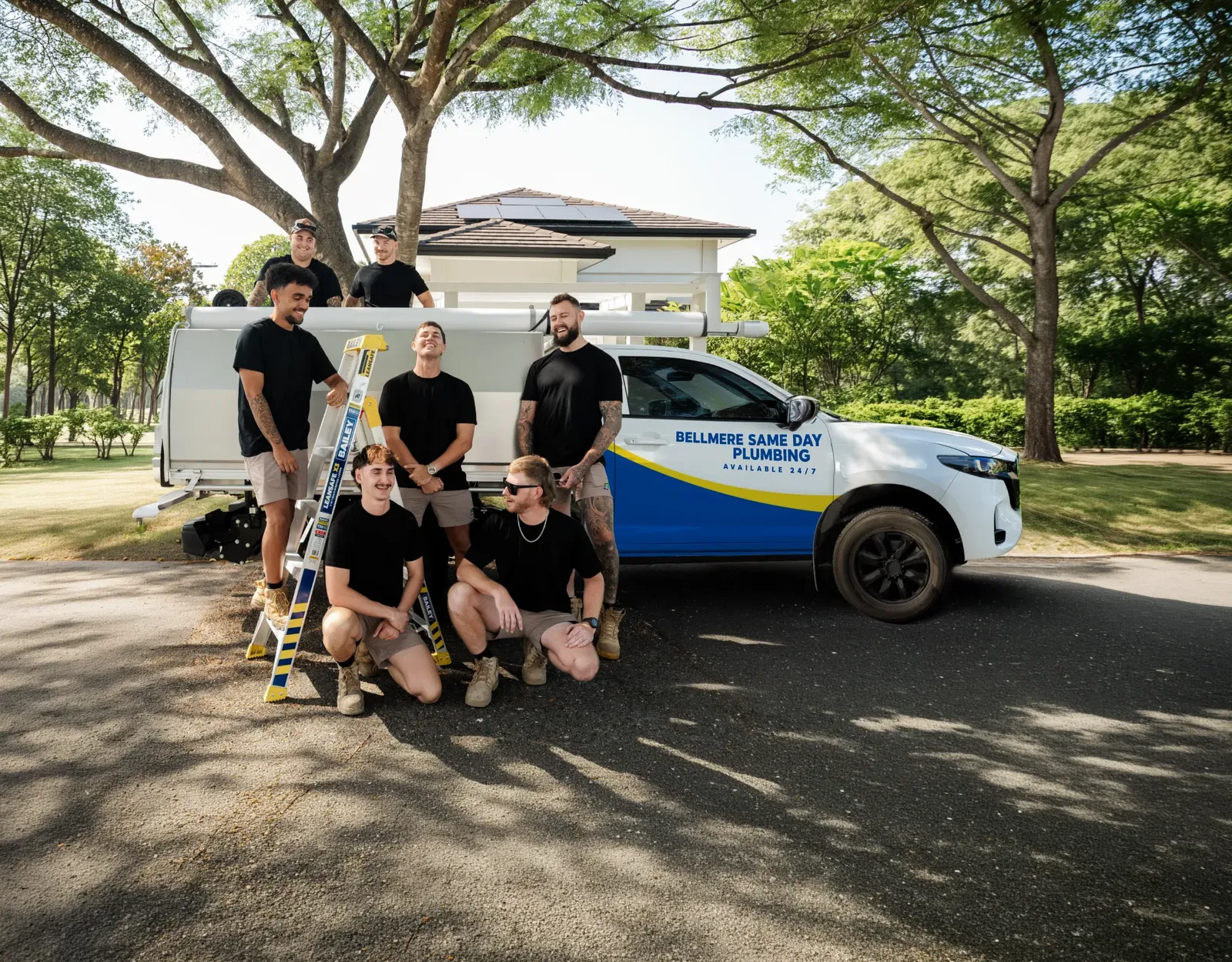
Most cistern faults are cured by replacing the inlet valve and the outlet washer, as long as the cistern itself is sound. Dripping taps ride on the same run, so our tap repairs page covers them, and choosing a new tap has its own page when a body cracks. For the wider fixture work, see our tap and toilet work page.
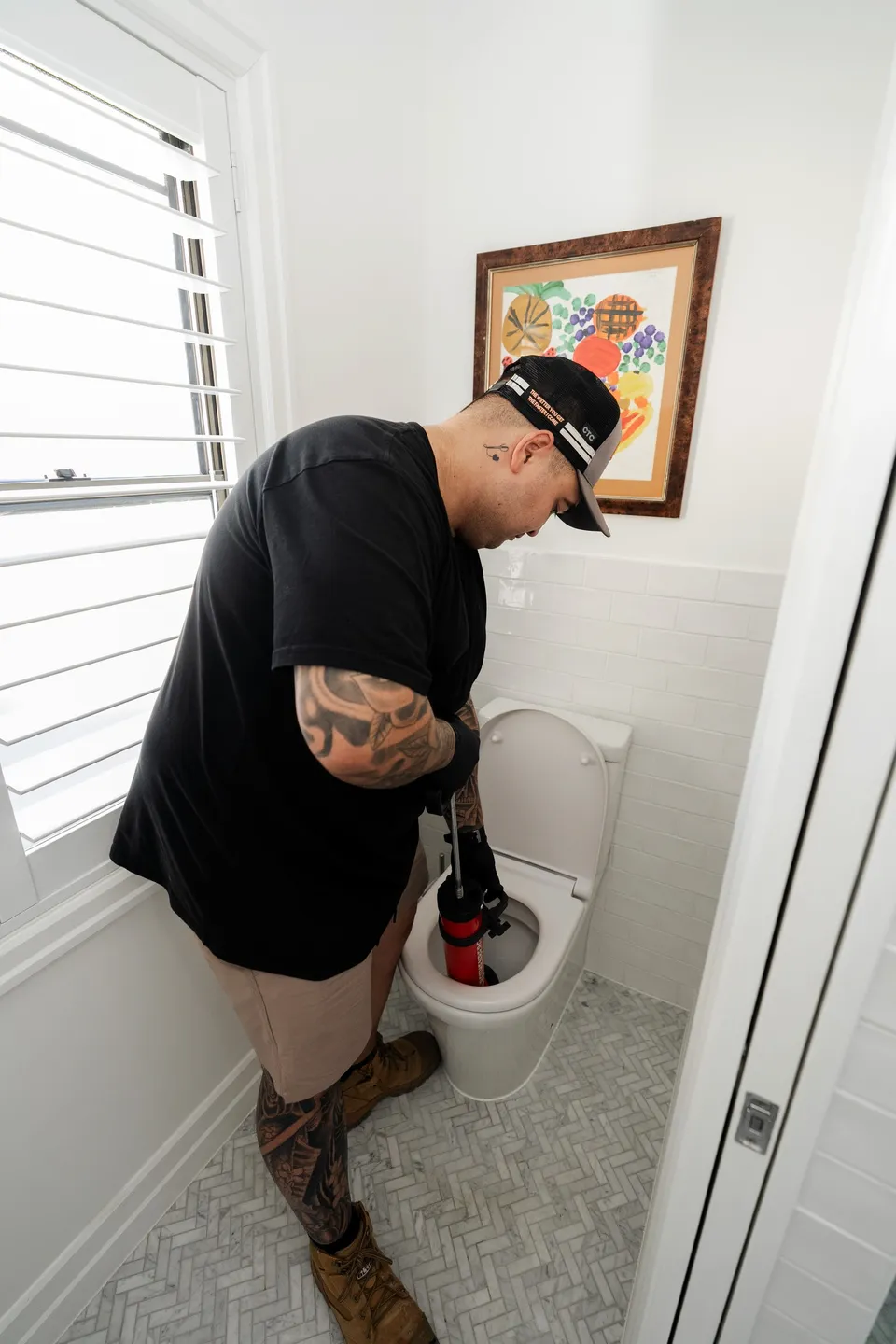
Running, Leaking and Slow-Filling Cisterns
Three faults cover most cistern trouble: a worn inlet valve that fills slowly or never stops, a tired outlet valve that lets water run into the pan, and perished seals that weep at the joints. Each part announces itself differently.
The inlet valve
tops the tank up after every flush and shuts off when the float hits its set level. Worn or blocked, the valve fills slowly or keeps filling without end.
The outlet valve
keeps the water in between flushes. Once the washer wears, water slips past into the pan, and the fill valve keeps topping up what was lost, so the toilet seems to run.
The seals
sit at every joint. When the rubbers perish, water finds the weakest one and shows up where you least want it.
A flush that arrives weak or half-done usually points to a low water level, jets under the rim blocked, or a button that fails to release. A cistern that will not fill, with the supply on, comes down to the inlet valve again, a float adjusted too low, or a stop tap not fully open.
One quiet test exposes a silent leak. Add some food colouring to the cistern and leave it unflushed: colour in the bowl means water is escaping, and flushing afterwards rinses it away because the colouring leaves no stain on ceramic. For the full diagnosis walk-through, see our page on a toilet that runs on.
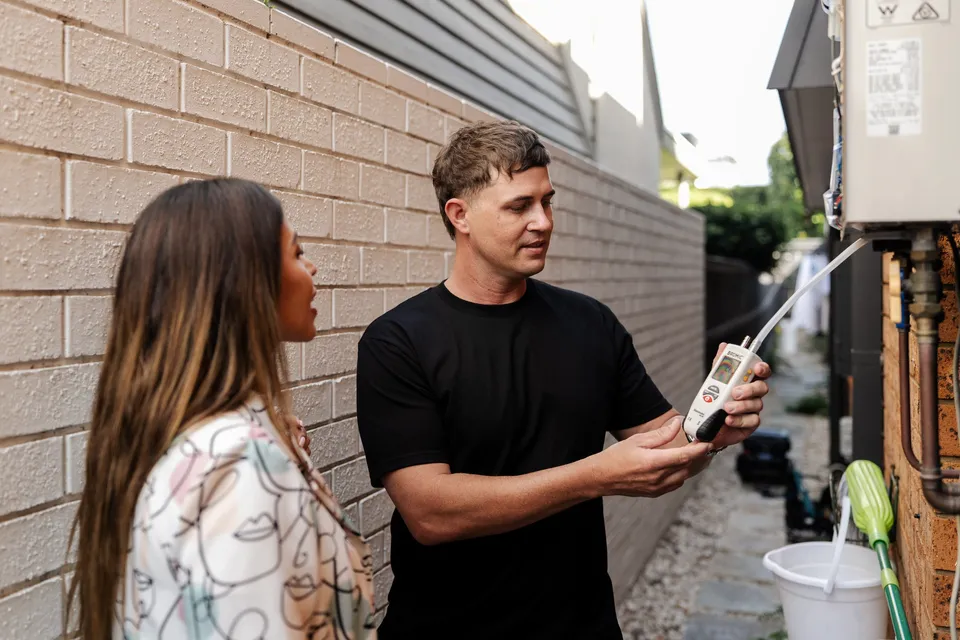
Leaks at the Base, Cistern and Supply Line
A toilet leak shows in three places: at the supply, where the stop tap or its braided hose drips; under the cistern; and at the floor, where the pan joins the drain. Each spot names its own culprit.
Water on the floor
water collecting around the base points to the pan connector, the drain seal under the pan, or a cracked pan.
Water down the back of the pan
the joint between cistern and pan has failed, and the leak tracks down between the two.
Water at the supply end
the stop tap on the supply line, sometimes called a mini stop, or the braided hose feeding it is the usual source.
A sewer odour with no visible water
the rubbers sealing the pan into the drain have perished or shifted, so we check the pan connector as well.
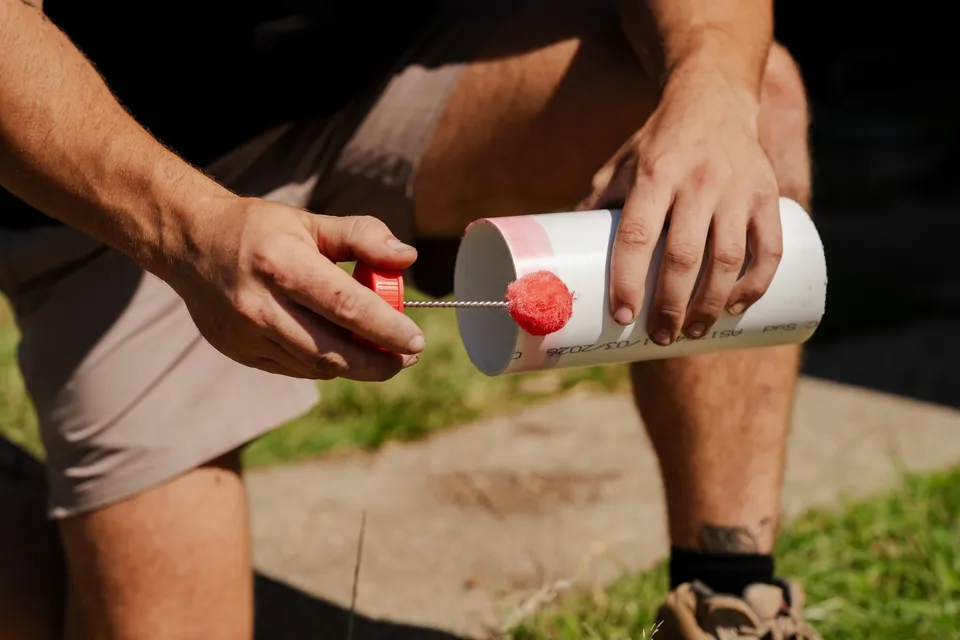
Cistern Washers and the Licence Line
Queensland draws a tight line around cistern work. Only three cistern parts sit on the QBCC's unregulated list: the float valve washer, the drop valve washer and the suction cup rubber. Anyone with the needed knowledge and skill may swap those three, though the finished job must still meet the standards.
Everything else on a loo falls under minor work, so a QBCC licensee carries it out without a permit and without a Form 4. Repairs, new buttons, seal renewals and pan connector work all sit on the licensed side of that line.
For rentals, Queensland tenancy law treats a broken or blocked toilet as an emergency repair. The owner or manager has to keep the place in good repair, and the tenant reports faults as soon as they notice them.

Repair a Toilet or Replace the Cistern
What drives the price is the failed part, any crack in the porcelain, how easily the cistern and the supply tap can be reached, and how many parts are replaced. You receive the figure as a fixed quote once we have looked at the job.
Porcelain is past repair once it cracks, so the cistern or the pan gets replaced instead. A toilet needing repair after repair can also cost less over the years to replace than to keep fixing, and we judge that job by job.
Any replacement cistern or pan must carry WaterMark certification and be registered under the national water efficiency labelling scheme. That combination is what makes the product legal for a licensed plumber to install.
Cisterns of Estate Vintage
Housing here went up in waves from the mid-1990s onward, so many original cisterns have passed twenty years of service. Valves and seals of that age fail on schedule rather than by accident, and a running loo near Peacherite Circuit is rarely a mystery for that reason.
At the last census, 88.1 per cent of homes were separate houses and the median age was 34, so most of our toilet work happens in family bathrooms that several people use hard all day. NewDirection Care Bellmere runs its own share of bathrooms across a village of multi-resident houses, and fixtures serving that many people wear the same way.
How a Toilet Repair Runs
- 1

Call or message us
Ring (07) 3523 6417 or use the form and describe what's going on in Bellmere. A few details up front mean the right gear comes on the first trip.
- 2

We test the cistern and name the part
The visit starts with the lid off the cistern: we watch the cistern fill and flush, check the inlet and outlet valves, and dye-test for silent leaks before naming the part that failed.
- 3
Fixed quote, then the work
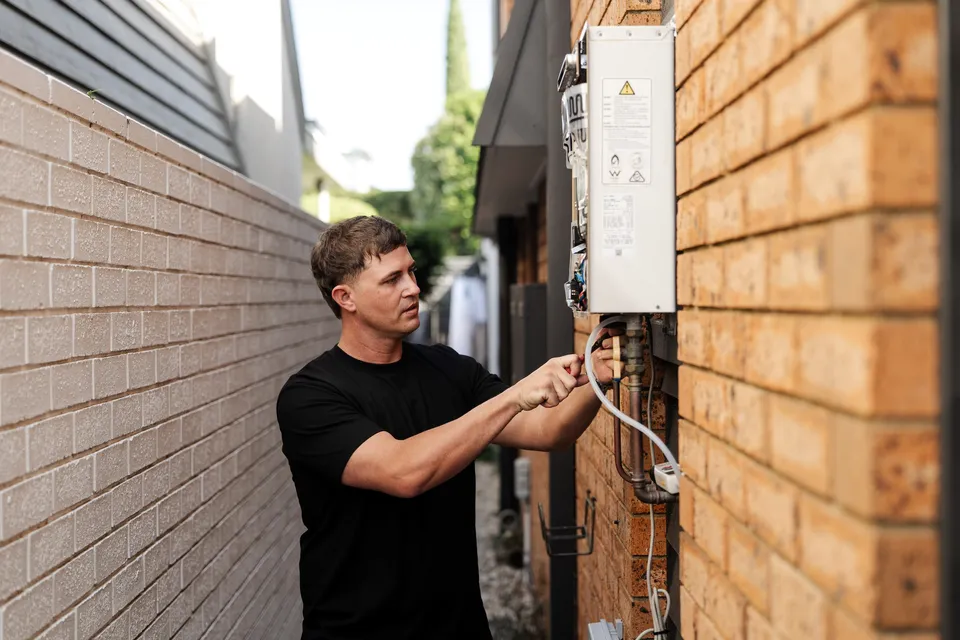
We give you a fixed quote before any work starts. It's flat-rate pricing with no hidden fees, and we only start once you approve it.
- 4

Settle up your way
Card and EFTPOS payment on site when the job's finished, or Fix now, pay later if that suits you better.
Plumbing job in Bellmere?
$0 call-out fees, available 24/7, and same-day where we can.
Toilet Questions From Bellmere Homes
Call (07) 3523 6417What usually goes wrong inside a toilet cistern?
Three parts cause most cistern trouble: the inlet valve, the outlet valve and the seals. The inlet valve refills the cistern after a flush, the outlet valve holds that water between flushes, and the seals keep the joints dry. Each failure shows its own symptom: slow or endless filling, running on, or leaking.
What causes a leak at the base of a toilet in Bellmere?
A leak at the base usually comes from the pan connector, its rubber seal, a weeping supply connection or a cracked pan. Water tracking down the back of the pan points to the joint between cistern and pan. Water pooling on the floor points to something lower down.
How much does it cost to repair a toilet in Bellmere?
The price depends on which part failed, whether the porcelain is cracked, how easy the cistern and its shut-off are to reach, and how many parts are replaced. The figure arrives as a fixed quote once we have inspected the job in person.
Can a cracked cistern or pan be repaired?
No, porcelain is past repair once it cracks. A cracked cistern or pan gets replaced rather than repaired, and any replacement must carry WaterMark certification plus registration under the national water efficiency labelling scheme.
Does Unitywater cover water lost from a leaking cistern?
No, the utility's concealed leak adjustment excludes water lost through leaking toilet cisterns, taps, hot water systems and other water appliances. The owner carries that loss on the bill.

Call Us About a Faulty ToiletWe'll call you back.
Book on (07) 3523 6417 for plumbing anywhere in Bellmere. We're available 24/7, there's no extra charge for nights, weekends or public holidays, and every job comes with $0 call-out fees.
To claim your $0 call-out fee, call (07) 3523 6417 today.